Pixels and Widgets

A personal blog by Tai Toh.

Finally Back Up

Over the past 6 months, I made a few error in judgements that have affected my ability to author stuff on the blog.

I started worrying about migrating content from my blog

Stupid. Really stupid. I have most of the posts available as staic HTML (it was a Movable Type powered blog). In the end, I’ve decided that it is easier for me to FTP them up and statically manage it rather than let octopress manage it.

I started messing around with hardware (new SSD in my late-2008 Macbook Pro, work laptop died, new Hackintosh build)

I think that it was an error to attempt so many hardware changes. The SSD purchase has given my Macbook Pro a new lease on life, but it has been a buggy (or rather the nVidia SATA controller is a POS) process with many beach balls (even with the newest firmware for the Vertex 3.

I can’t do anything about my woes with company hardware. But setting this stuff up each time is kind of a pain and updating to Mountain Lion didn’t help.

I’m considering doing all of this in a Linux VM that I can copy around, but that seems to defeat the purpose, nor would I be able to use my preferred-text-editor-of-choice. Xubuntu 12.10 is quite nice now. It’s more than functional without the learning curve that Unity brings to the plate with Ubuntu. Runs great in a VM on both my Air and Macbook Pro.

I still don’t know why I re-built my Hackintosh PC. It was an unnecessary side project (but the thing is a beast - i5 3750k, 32 GB of ram + 2 SSDs + 3 TB of storage). Runs both Windows 8 pro and Mountain Lion beautifully.

All distractions building up a tension or desire for me to write again.

Glad to be up and running and hopefully, it will be a bit more regular.

-T

IKEA SLITBAR Chef’s Knife

ASIDE: I originally started this post April 9th, but never got around to finishing it.

Updated (2012/10/31) - Added some more thoughts about the knife’s usability and design aspect.

At the time, I had just come off nose surgery, and spent my first weekend in IKEA. Not the ideal way I wanted to spend my time recuperating, but we needed a toddler bed for Emily, who had turned 2 years-old the past Friday (April 6th). I was all up for getting her out of her crib and having her sleep with her sister, Evelyn.

Trips to IKEA are often fraught with disappointment and surprise. As a kid, I hated it. May parents never let me and my brothers play in the ball room. What kid wants to look at furniture? Especially if its furniture not for them… That said, often times I find great stuff like the IKEA OMSORG Shoehorn, or the IKEA 365+ IHÄRDIG spice mill. There are also the disappointments, the most notable for me is their KAFFE press.

This past Saturday, I was browsing their kitchen centre when something caught my eye:

IKEA SLITBAR - Demascus Clad Knife by Tai Toh, on Flickr

I bought it on a whim and I’ve been really impressed with it. It actually might be the best thing I’ve purchased all this year (and the diamond honing rod is a great deal as well.

I re-profiled the blade so that it uses a 30˚ edge (one side was already 15˚) – this took forever on my Spyderco Sharpmaker. VG10 steel is much harder than my other knives.

I also took some 150-grit sand paper to round out the edge of the spine where it meets the bolster for more comfortable handling.

That said, the knife pops the hairs off my arm, and it has retained an incredible edge over the last 10 months. It’s a bit bigger than I would like with the tip being a bit too rounded. The knife is Asian inspired, with a slight belly so it works wonderful for “straight-chopping” and “rock-chopping” motions.

The VG10 blade has a tendency to rust if I leave it in my sink too long, but I think that’s more about me than the knife.

Word of warning – the fit and finish of the knife is not the best. Of the knives that I saw back in April, many of the knives on display and in-box had a noticeable edge between the pakka-wood handle and the bolster. In some cases, there is a large glue-gap between the two as well. Moreover, the grind can be a bit inconsistent (although in practice, I don’t think it will matter once you sharpen it). By far the biggest thing that I notice is the knife tip can be chipped.

Still, amazing for the $79 price point.

Pros

  • Great value for a VG10 steel blade
  • Very Sharp out of the box, but can be made sharper with the right tools
  • Full bolster design
  • Great warranty

Cons

  • Fit and finish could be better
  • Spine edge is uncomfortable
  • A bit large for small hands

Text Editors Wars - Return of the jEdit

Apologies for the pithy title, but it’s so easy to use Star Wars allusions with jEdit.

I discovered jEdit back in 2003, while working in my first Information Architect role back in OnX (now called Momentum). It was surprisingly fully functional, even back then.

Prior to that I had been using either Dreamweaver or Homesite (I still miss Homesite). Two features stood out for me:

  1. Tag completion that made sense: Typing </ would automatically close the previous open tag. I had always found the “immediate” auto completion of tags very obnoxious.1
  2. Highlighting of the end tag in the gutter and on screen: I have still yet to find any text editor that has as clear of a highlighting system as jEdit.
  3. True Cross-platform GUI: I know that MacVim and Aquamacs exists, but jEdit was the first text editor that made sense. It was also one of my first introductions to FOSS software.

The jEdit project started to stagnate after the 4.2 milestone release. Slava Pestov retired from the project to pursue his studies and work on his Factor programming language project and around 2008. I felt that this was a severe blow to the project and it languished. One could also argue tht at 4.2, the editor basically had it all, but there were several developments on the Mac OS X editor front (namely Textmate) that made me envious. There were also frustrating changes to Java that lead to several regressions in jEdit code.

This started was a very long and wayward search for the next editor. I’ve tried the big three: MacVim, BBedit, and Textmate. They all have their strengths and shortcomings.

Given that I worked almost exclusively in HTML and CSS at the time, I also ran multiple versions of Dreamweaver. It became oh so much more useful after it adopted the same convention as jEdit for closing tags. I tried Vim, but I couldn’t get used to the interface. Textmate’s per character undo drove me insane, but I loved the bundles. Espresso worked well, but struggled with anything that wasn HTML/CSS. I’ve had an on-and-off relationship with BBedit. For some reason, it never felt that modern to me (although the latest version basically addresses that).

I’m glad that the community of developers have picked up jEdit development again and I am eagerly awaiting the final 5.0 release which is shaping up to be quite great. Having spent the past few days setting up my jEdit again, I’m reminded why I enjoy using it so much. Just feels right for some reason.

Yes, it’s Java app. It also doesn’t feel like a first class citizen on OS X (doubtful that it would feel like that on any platform given it’s Swing routes. It’s also missing some niceties from more modern editors like Live HTML Preview. The developers are

If jEdit were not available, I’d have no issues with BBedit. It’s a phenomenal program, and I can see why it has been around for 20 years.

  1. In fact, the only editors that I have ever found that used this convention was Geany, Espresso and Dreamweaver. Aptana and BBedit have their own shortcuts for this, but I always found it more natural to just to attempt to close the tag.

Luma Labs Cinch Review

I ordered the Cinch camera strap the morning that I got the email on December 26th, 2011. I’ve wanted a Luma Labs sling ever since they first came out.

Thoughts after using it over the last 4 months:

  • Stable
  • Comfortable
  • Easy to use
  • Versatile
  • Beautiful

The one thing that I don’t like:

No swivel. While simple and stable are great, there are times when I need to use my tripod and I have to take it off. However, putting it back on again requires me to undo the buckle strap from the tripod mount, attach the mount back to the camera and re-thread the strap, otherwise I have a lot of twists in the strap. A swivel or quick release would solve the issue.

It’s not a big deal. It functions beautifully 95% of the time.

It strikes me that a swivel or quick release was probably in the works had not Black Rapid been issued their patent.

Definite fan of it and I’ve already convinced two others to purchase it.

Thinking About Advanced Mathematics

I found an amazing Quora answer on “What is it like to have an understanding of very advanced mathematics?” in my RSS at both Boingboing.net and Kottke.org:


  • You can answer many seemingly difficult questions quickly. But you are not very impressed by what can look like magic, because you know the trick. The trick is that your brain can quickly decide if question is answerable by one of a few powerful general purpose “machines” (e.g., continuity arguments, the correspondences between geometric and algebraic objects, linear algebra, ways to reduce the infinite to the finite through various forms of compactness) combined with specific facts you have learned about your area. The number of fundamental ideas and techniques that people use to solve problems is, perhaps surprisingly, pretty small – see http://www.tricki.org/tricki/map for a partial list, maintained by Timothy Gowers.

  • You are often confident that something is true long before you have an airtight proof for it (this happens especially often in geometry). The main reason is that you have a large catalogue of connections between concepts, and you can quickly intuit that if X were to be false, that would create tensions with other things you know to be true, so you are inclined to believe X is probably true to maintain the harmony of the conceptual space. It’s not so much that you can imagine the situation perfectly, but you can quickly imagine many other things that are logically connected to it.

That’s just the first two bullet points.

It’s an amazing read.

Personal anecdote regarding math (well physics, really)

My wife’s father-in-law has a Ph.D. in Physics and is a semi-retired Nuclear Physicist. When I read this Quora answer, it made me think of him.

His sheer genius is pretty impressive, and in one instance, when my wife and her friends were getting their asses kicked by 3rd-year Quantum Mechanics, he offered to help.1

The conversation, as I understand it, went like this:

My Wife: “Dad, we need help in Quantum Mechanics or the three of us are going to fail.”

Father-in-law: “Okay, give me a weekend to study up.”

And that was it. He retaught himself Quantum Mechanics in a weekend.

Over the next week, he taught my wife and her friends Dan and Bryan quantum.

Unbelievable.

I mean, I was pretty good at math and physics, but I could not relearn something like high school calculus in a weekend, much less teach a person how little I know about it.

Personal anecdote #2 regarding math

I’ve always been good at math and physics, but never brilliant.

One of the points in the article really resonated with me:

  • Your intuitive thinking about a problem is productive and usefully structured, wasting little time on being aimlessly puzzled. For example, when answering a question about a high-dimensional space (e.g., whether a certain kind of rotation of a five-dimensional object has a “fixed point” which does not move during the rotation), you do not spend much time straining to visualize those things that do not have obvious analogues in two and three dimensions. (Violating this principle is a huge source of frustration for beginning maths students who don’t know that they shouldn’t be straining to visualize things for which they don’t seem to have the visualizing machinery.) Instead…

Ah. This is the exact problem I fell into when reading those popular physics books while still in university. I was pondering, over the span of weeks, on what does a blackhole look like in 3D space. Often, it is depicted as a weighted ball sitting on a stretched out blanket (2D plane), but this belies its complex nature–it actually looks like this from any angle you look at. It’s hard to visualize.

There’s a point where my understanding of mathematics and physics couldn’t help me anymore with understanding things like superstrings and general relativity. No simple metaphor or visual mental model would help anymore. Things just couldn’t be intuited because they went against common sense.

However, it did pique my future-wife’s interest in me when I sat down at her table in the student union and asked her and her physics buddies “What does a blackhole look like? No, seriously, what does it look like in 3D space?”

I guess she thought, “Why would a guy studying gym want to know about this?”2

I can’t say it worked out too badly for me in the end.


  1. They all have degrees in physics, but you’d never know. In fact, my wife often says that her degree, a hybrid business and physics degree, does not qualify her to be business consultant nor a physicist.
  2. I have a degree in Kinesiology, the study of human movement and performance, with a specialty in ergonomics and human factors.

MG Seigler: Commenting Is a Facade

MG Seigler notes:

Here’s the thing: while some try to paint comments as a form of democracy, that’s bullshit. 99.9% of comments are bile. I’ve heard the counter arguments about how you need to curate and manage your comments — okay, I’m doing that by not allowing any.

I’m starting to feel more comfortable leaving them off.

Ownership for What You Write

I had the opportunity to read more blogs and listen to a few podcasts this past holiday. In particular I started listening to the B & B Podcast by Benjamin Brooks and Shawn Blanc and Back to Work with Dan Benjamin and Merlin Mann.

When you start consuming one media form (e.g., a blog) you inevitably stumble upon their podcast.

Now all these guys seem to know each-other, and they tend to propagate similar world-views (e.g., minimalism, pro-apple, great design, great UX, care and craft, etc.). By in large, that isn’t too interesting to me (probably because I have the same mindset). It’s when they differ that their commentary and interaction (which is already very thoughtful) goes to the next level.

Daniel Jalkut wrote a piece called Learn to Code which posited that “high-order” scripting is the new literacy. No doubt that this is empowering. It’s definitely helpful for me (although I think if there is one thing a person should know, it is RegEx, because that shit has saved my bacon a dozen times over). You should read Mr. Jalkut’s post if you haven’t already.

Guy English had a different view:

I appreciate where they’re coming from. I can, from a certain perspective, agree with the argument. But, let’s not kid ourselves, literacy is the new literacy1. The ability to read, comprehend, digest and come to rational conclusions — that’s what we need more of. We don’t, as a society, need more people who have the mechanical knowledge to turn RSS feeds into Twitter spam. We don’t need anything more posted to Facebook, we don’t need anything we photograph to appear on Instagram and Flickr. If “scripting” is the new literacy then we’ve failed. We’ve become Mario drowning on a Water Level.

To be honest, I’m kind of appalled at the idea that there might be a day where societies are judged by the percentage of the population who can code (if you want to use that as the benchmark of literacy). Then again, I work at a company that sells eBooks and my livelihood is based on people buying books.

One of the things that I find interesting is that this type of interaction, at least when I first started blogging back in 2002, was done typically done via the comments feature that MovableType had.2 These people are writing really thoughtful responses and taking ownership of their words. You don’t have the anonymous troll or link spammer in the comment threads anymore.

One of the new things that I am noticing is the “No Comments” trend. Some people like John Gruber have been doing it from the beginning. The authors are encouraging people to twitter a response, email them directly or post a reply on their blog (if they have one). Matt Gemmell posted a 1-month update on his experience after turning off comments. There are two points that I wanted to call out:

  • I feel more willing to publish short pieces, and to write more frequently.
  • I feel more positive, and I think the tone of my writing has evolved.

Bottom line, he feels it has been positive for him. I agree. I think comments are a barrier to the authoring experience. They require maintenance on the author’s part (although Disqus has a great admin interface for this), but more importantly, I’ve always felt that the directness of the feedback loop left me open to attack. Consequently, back in the early part of the 2000s, I felt that everything I needed to write about had to have some sort of gravitas. Exhaustion soon set in.

No comments makes me feel that I own this blog, versus me feeling like I manage some sort of BBS.

  1. Emphasis added by me.
  2. I think because at the time, blogging was new, not many people had a voice and things like pingbacks hadn’t been implemented yet.

Happy New Year

To the handful of readers out there who actually read this cubbyhole of a website, Happy New Year and best wishes to you, your family and the people (or pets) you love.

In the past, I’ve struggled with the end-of-year post. Is it a year-in-review post? Should I create a top 10 list?

In the end, it’s best to be thankful for all the things that have happened to me this past year. It has been a fantastic year for me personally and professionally. I can only hope that 2011 was like that for everyone else and that 2012 will be, at a minimal, as good if not better.

Happy New Year.

The Shift to Delighting the Customer

In ”The Dumbest Idea in the World: Maximizing Shareholder Value,” Steve Denning writes about Roger Martin’s new book ”Fixing the Game”:

“We must shift the focus of companies back to the customer and away from shareholder value,” says Martin. “The shift necessitates a fundamental change in our prevailing theory of the firm… The current theory holds that the singular goal of the corporation should be shareholder value maximization. Instead, companies should place customers at the center of the firm and focus on delighting them, while earning an acceptable return for shareholders.

Emphasis added by me. Roger Martin is the Dean of the Rotman School of Management at the University of Toronto.

Looks like I picked the right profession to be in. Fuck yeah.

Finding Time to Write

I’ve been thinking of the Writer’s Process and I’ve been wondering how to best optimize my time so that I can write more.

Aside: It occurs to me that I really should just concentrate on writing rather than wasting time focused on things that don’t actually contribute to the content authored in this blog.

I wonder how professional bloggers like Shawn Blanc and John Gruber focus themselves to write. Do they set aside a specific time in the day to write?

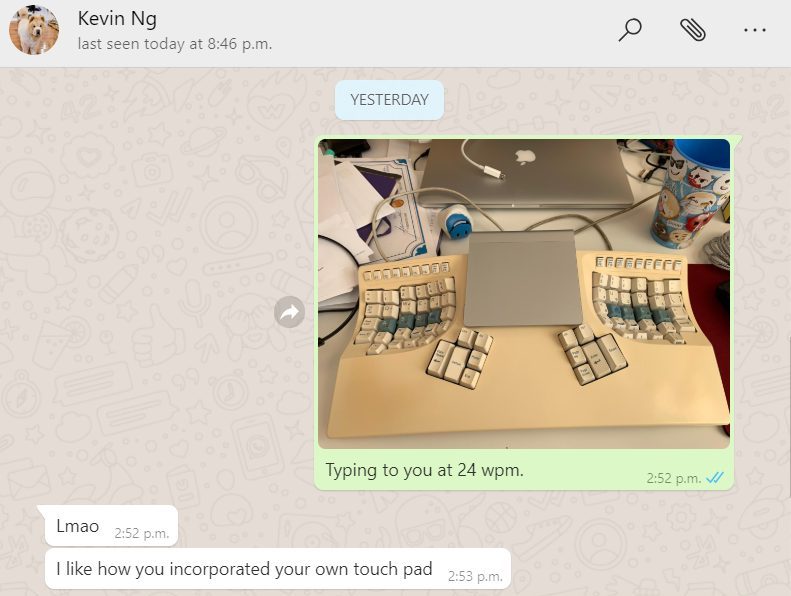
I wonder what their typing speed is? Mine averages at 48 aWPM (or so says Mavis Beacon). A lot of the bloggers I read come from some sort of computer science background–they typically type very quickly.

For me, I find that I often have the itch to write at the end of the day; late into the evening. That’s when things are quiet enough.

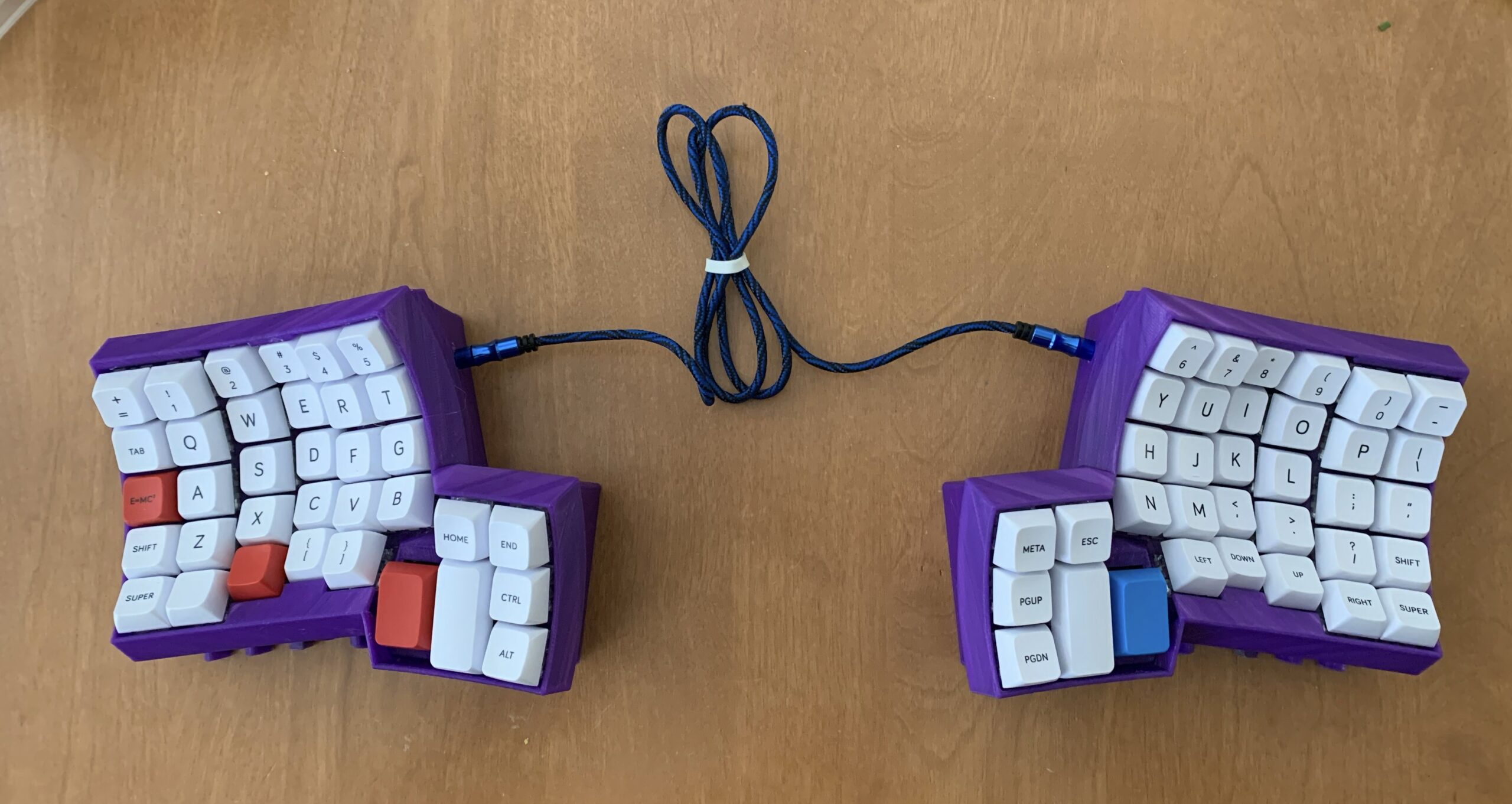
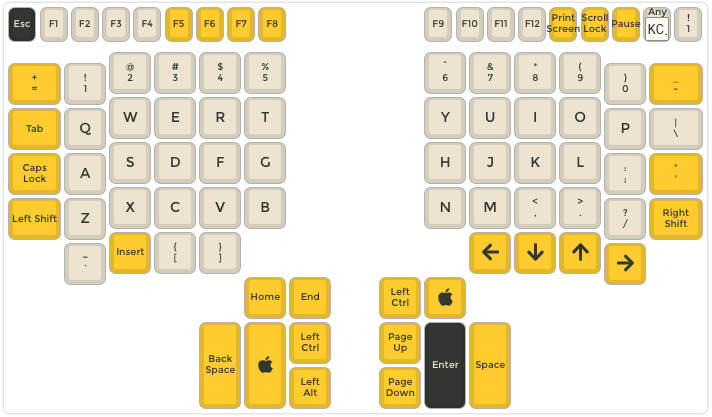
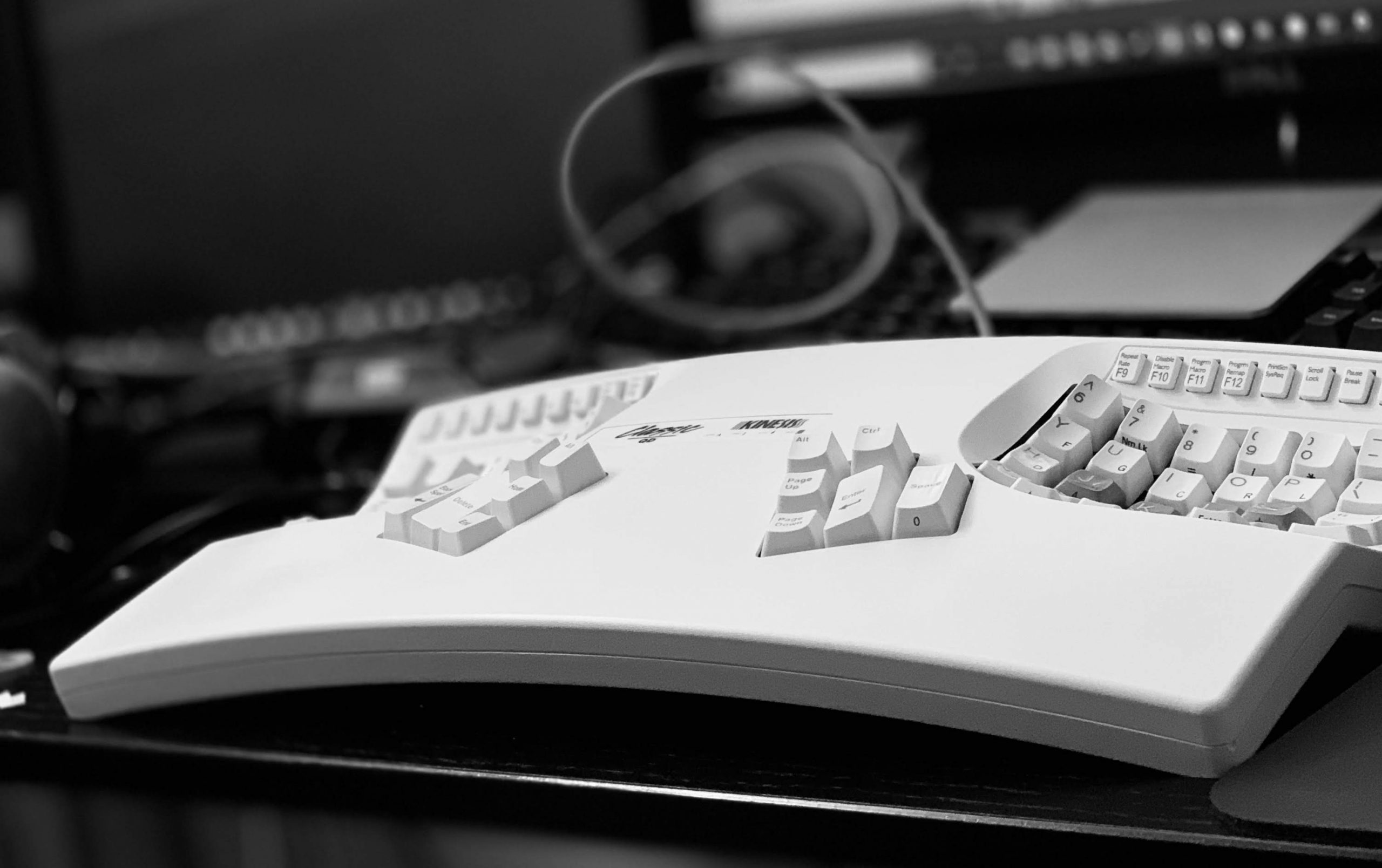
What are the tools that they use? What type of keyboard do they use? I notice that I don’t type nearly as fast on my Macbook Pro than I do with an external keyboard. In fact, I hope to one day upgrade my Apple wireless keyboard to one of those pricey mechanical keyboards that feature those tactile CherryMX switches. (I type faster with the mechanical feedback).

I’m a bit obsessed as to how these writers interface with their profession (whether digital or with pen and paper). I’m a firm believer that having great paper and a great writing instrument help elicit great ideas. It helps me when I sketch.

I suppose the same would be with how I write this weblog. What text editor do they use?1 BBedit? jEdit? Textmate? Sublime Edit? Do they use an external monitor? What environmental factors do they share (solitude, music, temperature), or are they like me? (I type this stuff on the dining room table of my home until my wrists hurt…then I move downstairs into the office and type until my feet get numb from the cold).

Perhaps I’ll just email them.


  1. I don’t know why I obsess over these kinds of things. On text editors alone, I’ve spent over $150 USD in 2011 for BBedit, Espresso 2, and Sublime Edit 2. They are all wonderful editors. If I do straight up HTML authoring, Espresso is just more focused. Anything else I bounce around between BBedit and Sublime Edit 2. BBedit is quite amazing, but there is something about that doesn’t gel with me. I think its because it doesn’t have some keybindings that I would expect it to have.